Harry Drinks Liquid Luck
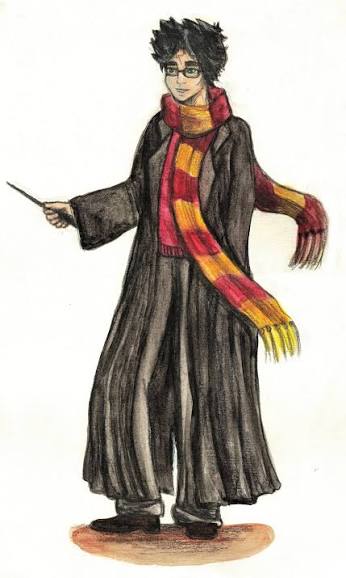
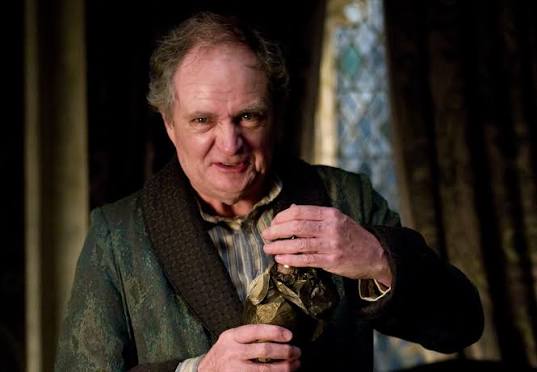
Half-Blood Prince. Harry swallows a single dose of Felix Felicis — liquid luck. Golden warmth spreads through him. Everything suddenly feels obvious.

Harry Was Never Guessing
It gave Harry a correct feeling — chemically guaranteed.
Most of the time, we haven't.
Can You Trust Your Intuition?
Three Fast Visual Puzzles
Medical Test: Base Rates and Bayes
Even with a strong test, rare events can dominate the denominator.
Coin Streaks: Independence, Not Memory
For a fair coin, each toss is independent: P(T next | HHHHHH) = P(T next) = 1/2.
Independence means past outcomes do not alter future bias.
Humans expect local balancing in short windows. Probability guarantees balancing only in long-run frequencies.
Streaks are not evidence of correction; they are natural patterns in randomness.
Birthday Collision: Exact Probability
Pick One Door
One Goat Is Revealed
Stay
Switch
Where Did the Probability Go?
Why Switching Is Better (Always)
Switching wins exactly when your first pick was wrong, and that happens 2 out of 3 times.
Monty Hall Assumptions (Rigorous Form)
1) Car location is uniformly random.
2) Player picks one door.
3) Host knows car location.
4) Host always opens a goat door not picked by player.
5) Host always offers switch.
If host behavior changes (sometimes opens randomly or does not always offer switch), posterior probabilities change.
The famous 2/3 result is model-dependent and therefore testable.
Monty Hall via Bayes Rule
Five Fast Games
1000+ Simulations
Let the room watch convergence happen in real time.
The 100-Door Version
Pick 1 door. Monty opens 98 goat doors.
Still feels 50-50?
Probability Is Full of Surprises
Birthday Paradox: Why It Grows Fast
Number of pairs among n people is n(n-1)/2, so comparisons scale quadratically.
Around n = 23, P(match) already exceeds 50%.
The paradox is not about strange probability; it is about hidden combinatorial growth.
Gambler's Fallacy: A Formal Contrast
Boy or Girl Paradox: Information Granularity
"At least one child is a boy."
Possible ordered families: BB, BG, GB -> P(BB)=1/3.
"The older child is a boy."
Possible: BB, BG -> P(BB)=1/2.
Different condition, different sample space.
Card Conditioning: Same Data, Different Query
Example deck query: from a two-card hand, given one card is an Ace, what is P(both are Aces)?
Condition descriptions such as "this specific shown card is an Ace" vs "at least one Ace exists" induce different posteriors.
Lesson: condition statements are operators on sample spaces.
Simpson's Paradox: Aggregates Can Reverse
Unified Principle
Why Study Probability?
It trains it.